

Much is said about how to become a leader: stay the course, be focused, work the hours, network, manage up, down and sideways. All true, but will this advice hold up in an era of AI-driven disruption, shrinking headcount, questioned authenticity and geopolitical uncertainty?

Leaders of luxury brands across several sectors have expressed cautious optimism about the year ahead, indicating a market navigating uncertainty rather than clear growth momentum.

New cross‑jurisdictional analysis shows that 2026 marks a decisive moment for the luxury business as environmental, social and governance (ESG) regulation across major markets becomes more prescriptive, more interconnected and considerably more operational in nature.

Global integration, once seen as a hedge against risk, has become a vulnerability.

While many luxury companies have gone private with success, this has not universally been the case. Here is a blueprint for enhanced control and elevated customer experiences.

Luxury brands now face significant challenges in attracting and retaining talent in this evolving landscape where client advisors are expected to show equally proficiency in digital and in-person selling and tech adoption.

Much is said about how to become a leader: stay the course, be focused, work the hours, network, manage up, down and sideways. All true, but will this advice hold up in an era of AI-driven disruption, shrinking headcount, questioned authenticity and geopolitical uncertainty?

How wealthy families should navigate market complexity, embrace alternatives and build a resilient multi‑generational strategy.

From masterpieces to markets – expert guidance for art collectors on how to build a collection that reflects prudence, provenance and passion.

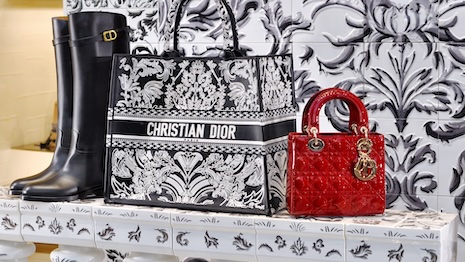
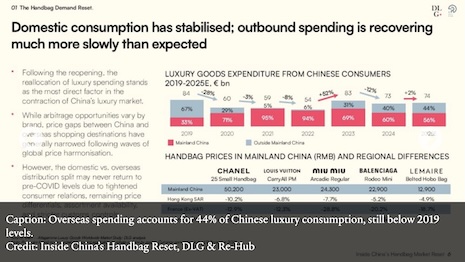
Luxury consumption has not disappeared. Yet handbags, once the most explicit marker of status, are beginning to lose their allure.

For years we’ve heard that the term “luxury” doesn’t stand for what it was intended: exclusive, rare, high quality. Many folks want to dump the word but have no substitute. In reality, luxury has undergone a silent divergence, with three camps catering to distinct audiences.

With strong macro fundamentals, rapid wealth creation and a young, aspirational consumer base, India is now firmly positioned among the top three fastest-growing luxury markets in the world.

Shifts in the payments landscape are creating new ways for businesses to unlock efficiencies, deliver value for their organization and better serve customers.

While many luxury companies have gone private with success, this has not universally been the case. Here is a blueprint for enhanced control and elevated customer experiences.

Luxury consumption has not disappeared. Yet handbags, once the most explicit marker of status, are beginning to lose their allure.

For years we’ve heard that the term “luxury” doesn’t stand for what it was intended: exclusive, rare, high quality. Many folks want to dump the word but have no substitute. In reality, luxury has undergone a silent divergence, with three camps catering to distinct audiences.

While there are a multitude of applications for generative AI, marketing is one of the areas that has made the greatest inroads while still being susceptible to the greatest risks.

The usual approach – clearance sales – are not going to help retailers get out of their current inventory-glut jam and build the runway they need to hit their longer-term goals.

Much is said about how to become a leader: stay the course, be focused, work the hours, network, manage up, down and sideways. All true, but will this advice hold up in an era of AI-driven disruption, shrinking headcount, questioned authenticity and geopolitical uncertainty?

The professionals who figure out AI don’t become less human. They become more available for the work that actually requires humanity.

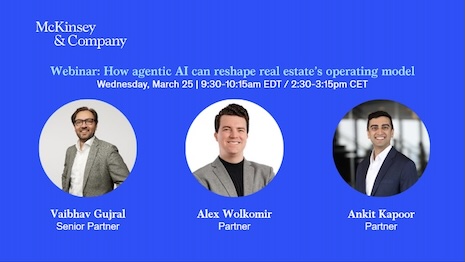
Join McKinsey & Company March 25 at 9:30 a.m. to 10:15 a.m. EDT (New York time) as they discuss how agentic AI can reshape real estate’s operating model, moving beyond isolated use cases toward redesigned end-to-end workflows.