
 Miami's Edge House with terrace view
The scale of Miami’s global event economy is beginning to show up in real dollars.
A recent Deloitte analysis projects that short-term rental hosts across U.S. host cities could generate nearly $156 million in revenue during the 2026 FIFA World Cup in June and July, with Miami ranking among the top markets for earnings.
“People see the World Cup as another sign of Miami’s global relevance and reinforces the idea that Miami is a world-class city with strong lifestyle appeal and long-term value,” said Angel Nicolas, founder of The Nicolas Group at SERHANT, a real estate brokerage.
“A lot of our clients are asking questions about short-term rentals and timing,” he said. “Some are even planning trips around it so they can take advantage of the demand while they’re away and maximize top dollar.”
 Edge House in Miami
Miami wise
The influx of more than 2 million visitors nationwide during the FIFA World Cup is expected to place significant pressure on traditional hotel inventory, reinforcing the role of rentals as an essential layer of the ecosystem and creating a compelling window for investors to drive outsized returns during concentrated event periods.
As such, Miami is no longer operating like a seasonal city – it’s functioning like a global capital with a packed calendar that barely comes up for air.
From the Miami Open and Ultra Music Festival to the Formula 1 Miami Grand Prix, Art Basel Miami Beach, international boat shows and the surge of global attention following Lionel Messi’s arrival, the city has engineered a near year-round cadence of cultural and sporting moments.
All of it builds toward the 2026 FIFA World Cup, an inflection point expected to push Miami’s global profile even higher.
During peak global moments traditional hospitality supply is often supplemented by high-end residential inventory.
While hotels continue to play a central role in accommodating demand, short-term rentals are functioning as a critical complement, particularly during peak event periods when affluent visitors seek more space, privacy and flexibility.
 Christopher Wands
“Major events are changing how people choose to stay in Miami,” said Chris Wands, founder of The Wands Team at Douglas Elliman Real Estate.
“There’s a growing desire, especially by luxury travelers, to experience the city beyond the confines of a traditional stay,” Mr. Wands said. “They want to experience Miami like a local, not just as a guest.”
Developers are responding with a new generation of product designed explicitly for this reality.
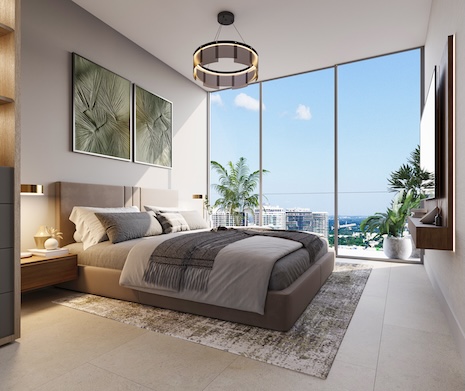 Edge House bedroom
Hotel-like experience
Edge House Miami, located in Edgewater, was conceived from inception as a wholly integrated, rental-ready residential model.
Units are delivered fully furnished with design-forward interiors.
Flexible layouts, including lockout configurations, enable owners to partition space – whether to accommodate multi-generational travel with added privacy or to balance personal use with rental income.
 Edge House pool
A centralized management approach streamlines the leasing process during peak demand periods.
“We’re seeing short-term rental demand switch from opportunistic to intentional,” said Ruben Alvarez, vice president of sales at Edge House Miami.
“Buyers and travelers today are prioritizing assets that are designed for rentals from day one,” he said.
“In a market like this one, where global events drive consistent spikes in demand, that level of readiness and flexibility translates directly into performance.”
 Ruben Alvarez
Beyond the residences themselves, the project leans heavily into hospitality-driven infrastructure with concierge-style services, amenity programming and a user experience that mirrors the expectations of a luxury hotel guest while preserving the autonomy of private ownership.
This evolution in product is ultimately responding to a deeper shift in behavior.
 Edge House lobby
Flexibility over permanence
Affluent consumers are increasingly choosing flexibility over permanence, with more high-net-worth individuals opting to rent.
The data is beginning to reflect this divergence.
Nationwide, the share of households earning more than $100,000 who rent has climbed from 18 percent to 24 percent, signaling a broader recalibration in how financial assets are being distributed.
“We’re seeing a more strategic approach to how wealth enters Miami,” Mr. Wands said.
“Some high-net-worth individuals are parking themselves in rentals while they evaluate when and where to place long-term capital,” he said.
“At the same time, Miami, because of its global relevance and liquidity, has become a natural staging ground for that capital.”
The convergence of these forces – event-driven demand and a more pointed, flexibility-driven renter mindset – is creating a more durable rental floor at the high end of the market.
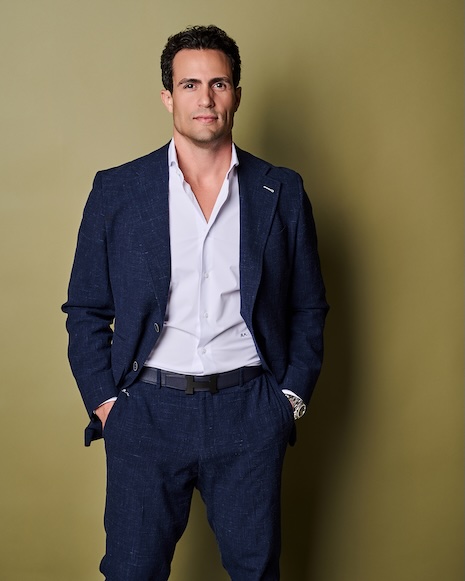 Angel Nicolas. Image credit: Juan Algarin
LUXURY RENTAL DEMAND remains elevated, supported by affluent tenants who are not as price-sensitive and quite focused on access, timing and experience.
For investors, this introduces a new underwriting framework.
Residential real estate traditionally has been viewed as either a long-term hold or a lifestyle purchase.
Now, however, buyers see it as a hybrid instrument that can generate income in the short term while preserving optionality for future capital deployment.
“People want optionality, they want asset performance, and they want to experience the city on their own terms,” Mr. Wands said. “That shift is rewriting the playbook for developers, investors and the entire luxury market.”