
- Luxury Marketer - https://www.luxurymarketer.com -

The dirt on English country gardens

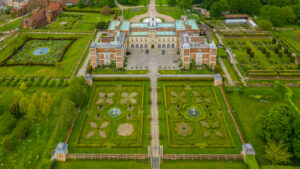
Hatfield House in England's Hertfordshire, just 21 miles north of London, is a fine Jacobean country house and garden set in a spectacular countryside setting. It is home to the 7th Marquess of Salisbury. Image credit: Shutterstock Hatfield House in England's Hertfordshire, just 21 miles north of London, is a fine Jacobean country house and garden set in a spectacular countryside setting. It is home to the 7th Marquess of Salisbury. Image credit: Shutterstock


English poet Alfred Austin had a firm handle on the glory of gardening: “Hands in the dirt, head in the sun, heart with Nature.”

Not all of us city birds can put our Barbours and wellies to good use till we visit a doughty English country house surrounded by acres of undulating parkland, forested clumps and obligatory pond – praying the skies do not open on the traipse.

My mind goes straight to Lancelot ‘Capability’ Brown when I think of the classic English landscape garden that combines natural and irregular patterns with élan. The 18th-century designer was known for taming landscapes, teasing waterways, ambitious plantings and sweeping vistas framing a magnificent stately pile.

While less formal than French gardens, Brown’s surviving green masterpieces are as much a visual draw for visitors as the houses that sit amidst a tamed Nature. I serve up as evidence Blenheim Palace, Chatsworth and Stowe, not to mention the countless National Trust properties in England.

Colorful garden enveloping a traditional cottage in England's beautiful Cotswold region. Image credit: Shutterstock Colorful garden enveloping a traditional cottage in England's beautiful Cotswold region. Image credit: Shutterstock

Wild about it
Then you have modern-day impresarios – Arabella Lennox-Boyd (Eaton Hall) and her passed-on peers, Rosemary Verey (Barnsley House), Mollie, Marchioness of Salisbury (Hatfield) and Russell Page (Longleat).

These 20th-century visual artists’ gardens pulse with energy, blooming with riotous flowers and elevated through wafting scents in formal and informal settings. There is room for fountains, sunken gardens, follies and kitchen gardens for herbs, vegetables and fruit.

Such was their influence that even King Charles III turned to Verey and Lady Salisbury for his country residence in Gloucestershire, Highgrove House. As Prince of Wales, he took an early lead and introduced wildflower meadows and organic gardening practices, along with nooks and crannies for contemplation.

Now, as king, Charles has introduced a topiary – trimming trees and shrubs into ornamental shapes – to Sandringham House, the Norfolk residence that he inherited from his mother, Queen Elizabeth II.

Gertrude Jekyll and Vita Sackville-West did their own bit for cottage gardens, feeding into the English love for gardening and trusty secateurs.

A rash of books and television shows on gardening, helmed by royal favorites such as Alan Titchmarsh, has only spawned a new generation of green thumbs and armchair gardeners.

NOT SURPRISINGLY, country gardens, at least of the most impressive variety, require deep pockets and patrons.

Luckily for us, most country houses open to public for a fee also boast well-maintained gardens worth the stroll and exploration. The National Trusts for Scotland and the rest of the United Kingdom, and the Royal Horticultural Society, also do their bit to feed this British pastime.

So, what is it about a country garden that is so alluring?

For me, away from the urban hubbub, it is the combination of lush foliage, colorful flowers releasing beguiling fragrances and chirping birds sharing in the common joy. It is walking past trimmed hedges and through proud meadows, looking up to majestic trees and beyond to expansive views, even the sound of a babbling brook perhaps. It inspires, it calms the mind, soothes the senses, and it is effective.

As a wisecrack once said, “Gardening is cheaper than therapy – until your spouse adds up the receipts.”